
By
Sylvie Planel
PhD Anthropology
First Place Winner, Writing Competition on the Theme of Transformation
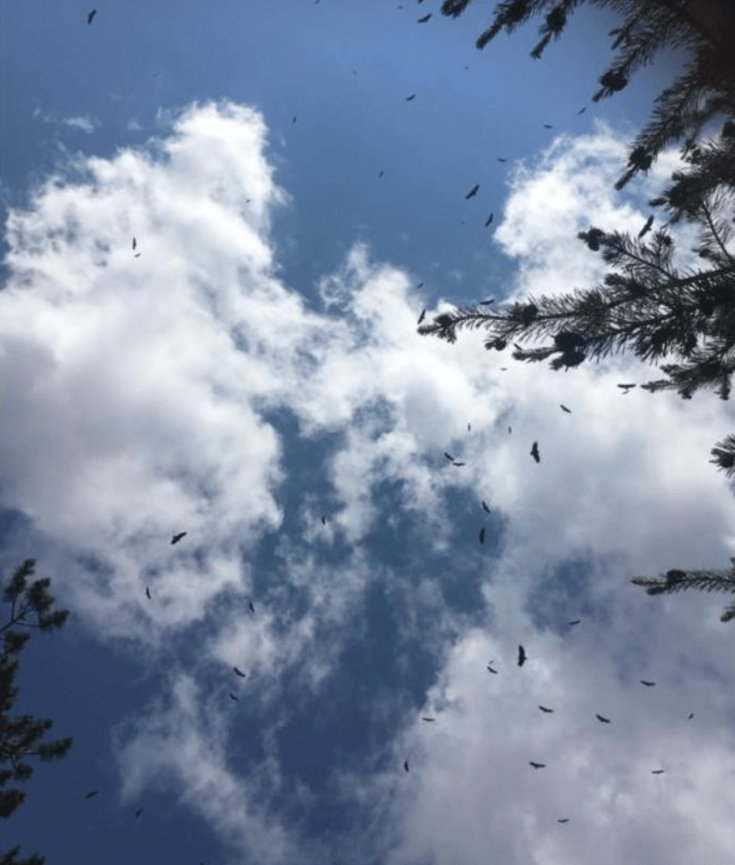
Their figures project shifting shapes on the ground, cutting out the sun as they fly above us. It’s an ominous sensation to stand below, in the shadow of these huge birds that are circling overhead in large numbers. I’m in the French Alps, researching human-vulture relations in a mountain area where vultures were reintroduced in the 1990s, following their disappearance a century before that. I’m interested in understanding how the landscape is lived, embodied and experienced by both people and vultures. I work with park rangers as they carry out monitoring task and coordinate the disposal of livestock carcasses from neighbouring farms onto sites where vultures can come and scavenge, saving farmers the need to call the knacker-man. Through daily observations, I begin to imagine what it might be like to ‘vulture’, taking inspiration from Tim Ingold’s proposal of thinking about creatures in their grammatical form, to reveal how “every animate being is fundamentally a going-on in the world”.1
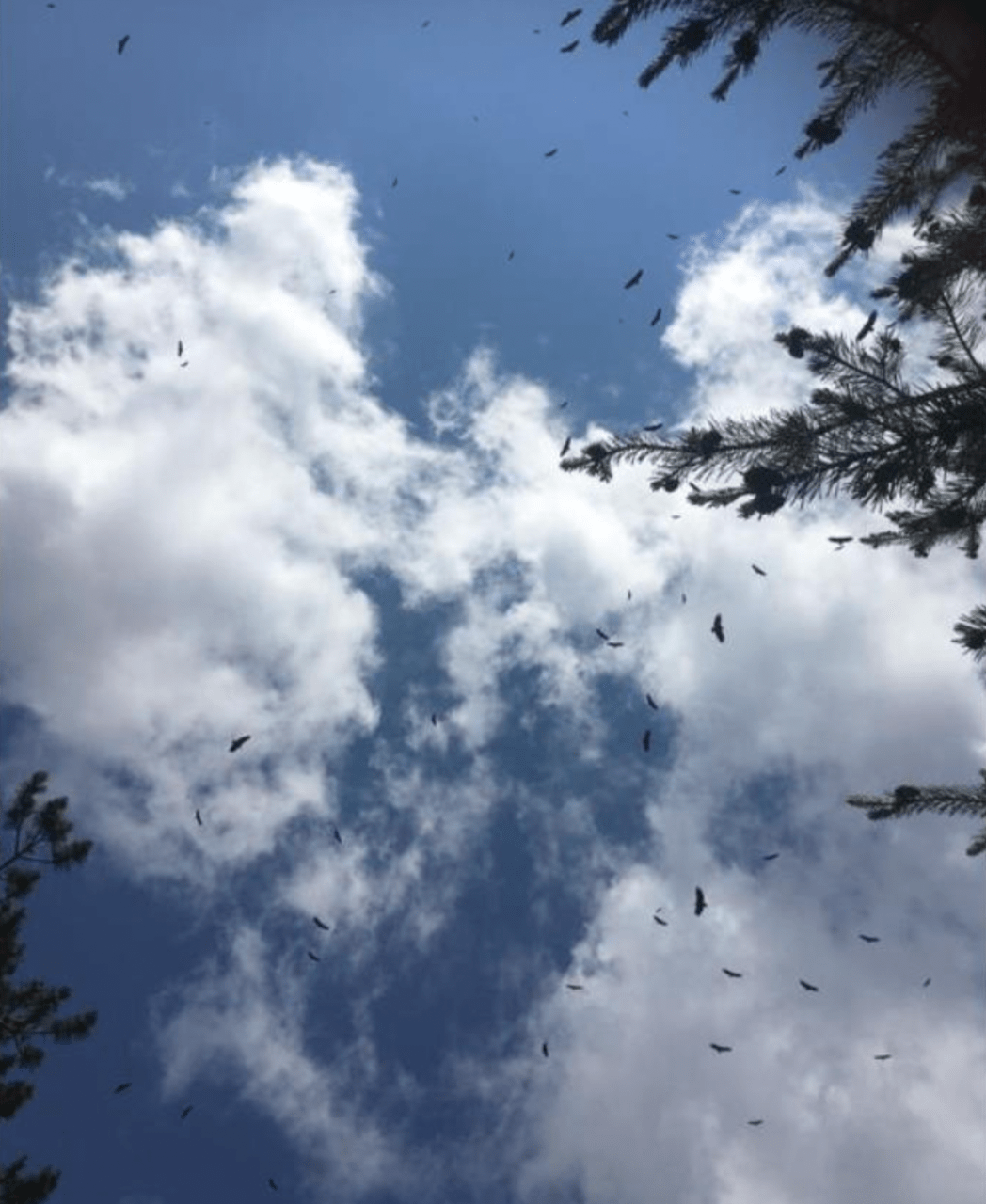
To vulture takes patience, first and foremost. A good pair of eyes to scan the ground below, and a means of locomotion that enables you to prospect over large territories. Expending little energy as you glide on the currents, moving above valleys and farmlands, woods, mountains, and scree-beds. When you spot something, you make circles, waiting to see, if it moves, if it’s food yet, or if it still belongs to the world of the living, which holds little interest for you. You sense, somewhere in the vulture-way that you think or learn or are, that the large flocks of sheep that appear in the plateaus over the summer months are worth paying attention to, and when they leave, the Alpine ibex who spend their winter days grazing sparse and inaccessible rocky terrain. A connection too has grown between the sight of those white, shiny and noisy shapes that career up the mountains sometimes, from which emerge bipedal creatures that carry inert bodies, before disappearing back into the white, shiny and noisy shapes, following the direction they came from in reverse direction.
Often, you circle above whatever has taken your attention, to wait and see what might unfold. Perhaps an animal in a herd will be left behind and lie motionless. You’ll continue circling, other vultures will join you. And at some point, enough something – certainty, confidence, motivation, numbers – will pull you down from your heights. You’ll descend and a very different momentum will kick in. It’ll be fast, colourful and juicy. You’ll muscle your way in to that heap on the ground, still warm but lying so still you know no danger will come of it. Your sharp beak will come useful here, as well as your long supple hairless neck, as you dive into flesh and pull on tendons and muscles. And your tongue, with its diamond shaped hole pierced right in its centre, that enables you to swallow fast, fast, fast. Within minutes, the heap of flesh will be reduced to skin and bones. That’s when the acids of your stomach will get to work, breaking down the flesh you have consumed, neutralising any bacteria you’ve ingested. Then the time will come to take the airs once more, to the cliffs where you and your tribe spend your nights, and near and far on your prospecting days. All 8 kilograms and 3 metres of aligned feathers of you, moving fast and effortlessly through the skies, until the moment when another creature’s heartbeat beats its final beat, and you will swoop down to land once more.
- Ingold, Tim. 2013. “Anthropology beyond humanity.” Suomen Antropologi: Journal of the Finnish Anthropological Society, 38(3): 21. ↩︎
 Anthropolitan