
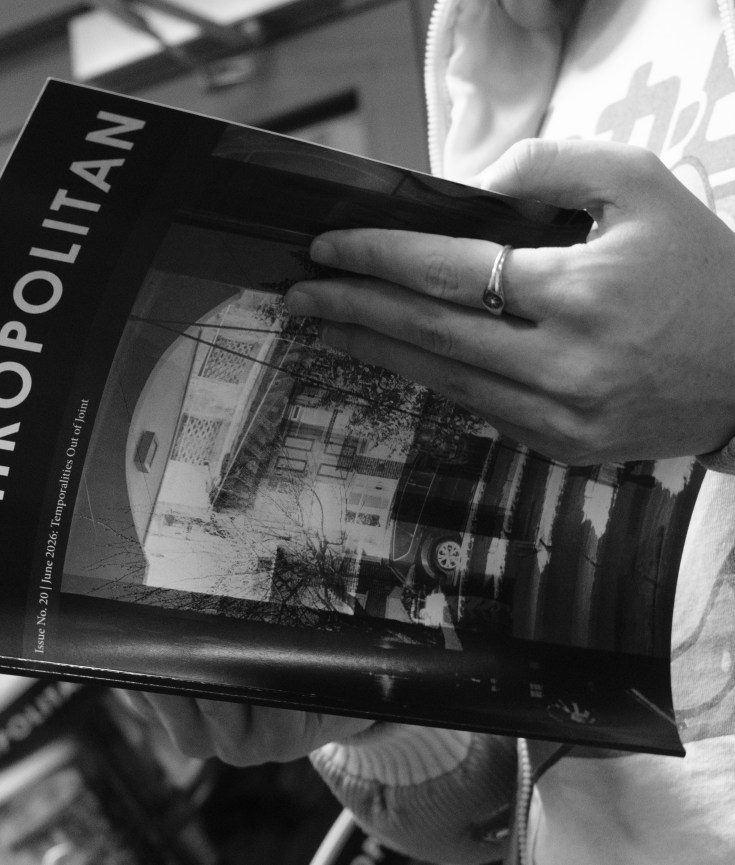
This is it! The time has come!
After a year-long hiatus, Anthropolitan returns in print, reimagined and reworked to reflect its new ambitions.
We were proud to launch the 2026 print edition on June 9th at the Anthroshow, alongside the shortlisted images from this year’s photography competition. It was a day filled with ethnographic curiosities, conversation, laughter, and—above all—a palpable sense of community.
This year’s issue is guided by one central idea: temporalities.
As UCL marks its 200th year, we took this as an invitation to reflect on the past, present, and future of the department, and to sit with the many ways time is lived, felt, and encountered. As the editorial notes remind us, anthropologists rarely speak of ‘time’ in the singular—we are always dealing with temporalities, plural and often ‘out of joint,’ caught in bodies, materials, landscapes, and everyday life.
The pieces in this issue follow these shifting rhythms. They move from colonial pasts to contested presents, and toward uncertain, and even necropolitical futures. They dwell in fleeting moments—waiting for coffee, walking through woods, standing beneath cherry blossoms—while also tracing inheritances of empire, memory, and loss.
Students were invited to respond to this theme not only through essays, but through images, poetry, and experimental forms. The result is a collection that pushes the boundaries of what counts as anthropological work:
a poem about the Red Phone Boxes that no longer ring,
a visual essay on the afterlives of the Manchu queue,
reflections and anxieties from and beyond the field,
autoethnographic writing on queer love and temporality,
and moments of grief and memory rendered through the material textures of everyday life.
Rather than presenting time as linear or resolved, the issue gathers fragments—moments caught, held, and sometimes unsettled. It is, in many ways, a publication that perfectly captures when and where time is ‘met, caught, sold, held, or made to disappear’.
This year’s winner of the Picture Competition Vanisha Patel captures this sensibility beautifully. The camera does not simply freeze a moment—it stands within temporalities, at the point where they intersect. The superimposed images evoke the uncomfortable, messy and disjointed experience of inhabiting more than one place at once —of being not fully here, and not fully there.
The 2026 edition also marks a new chapter for Anthropolitan, merging with The Creative Collective and forming a funded Student Editorial Committee. Bringing together contributors across degree programmes and formats, this issue is our bravest, most creative and most ambitious to date.
Above all, this print is an invitation.
To pause.
To move through these pages at your own pace.
To sit with time and encounter it differently.
We are fortunate to have such a creative community and to receive an overwhelming amount of support through your submissions. We hope you enjoy reading, viewing, and spending time with Anthropolitan 2026!
The 2025–2026 Anthropolitan Editorial Team
Article photo credits: Will Taylor

