By Danielle Galway MSc Anthropology and Professional Practice
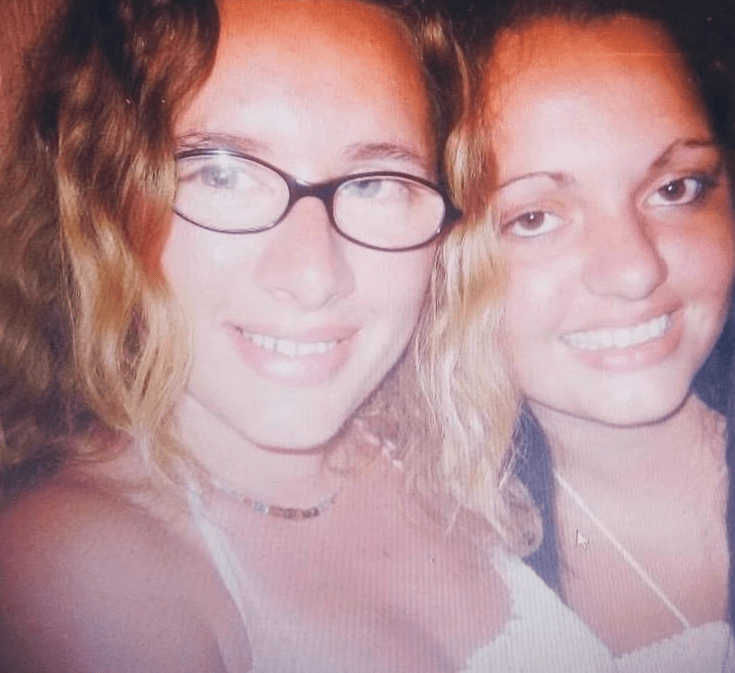
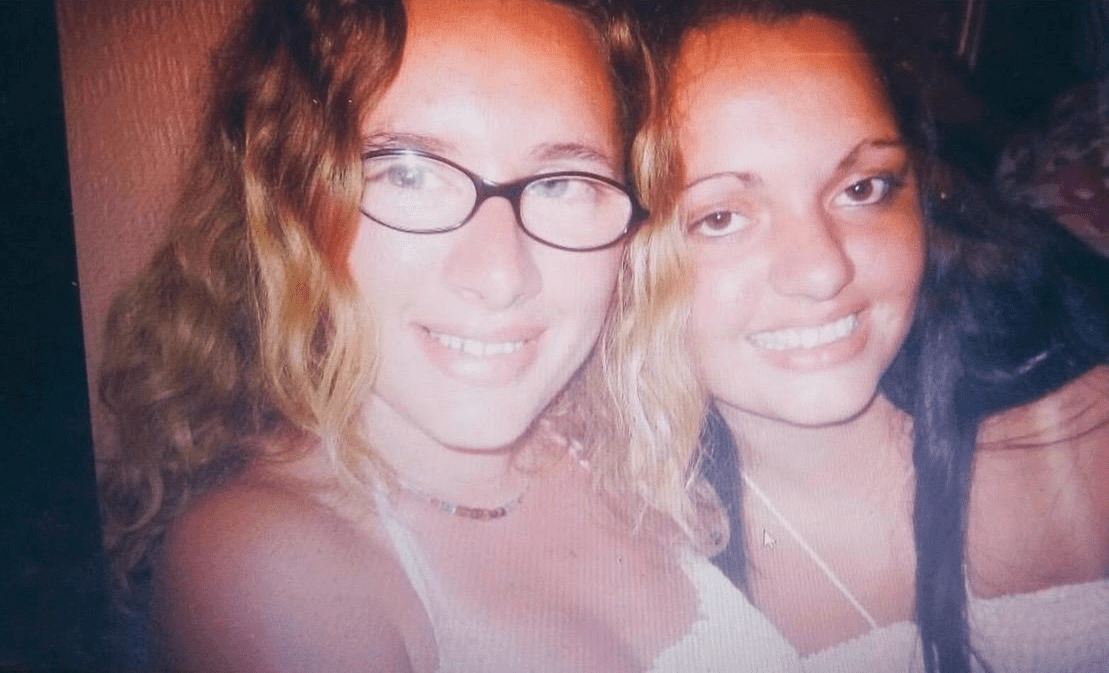
The photograph shows two young women, on a summer evening, a night out in Cornwall. Similar but so different, they are sisters, seven years apart, they share a father, not a mother. When I look at this picture I see my sister Kylie, frozen in time. And a version of myself I don’t recognise. The girl I was then changed when my sister died. In the picture Kylie is twenty, it is July. In August she will turn twenty three. The photo was taken on a film camera. An ordinary moment that now holds so much because it’s one of the few pictures I have of us. Every photo of her that exists, her absence has made sacred.
Memories of summers past are bathed in light and youth and freedom but nostalgia isn’t the same as truth. Those summers feel like another life but at the time, they felt endless. And although she’s been gone for so many years now, she’s still with me. My sister is no longer here, but she’s never gone away. She exists. For a long time, she only existed in photos. We didn’t talk about her. But now she’s alive in the stories we tell and the words we write. Now we say her name. We didn’t for a long time.
Grief has shifted my sense of temporality. I measure time in different ways: by the years I’ve been on earth and by the years I’ve been without her. Every birthday, every Christmas, we remember that she would have been thirty this year, she would have been forty now, and so it goes on. We imagine who she might have been.
Grief feels completely nonlinear. Grief is a heavy fog that lifts for years and then descends again out of nowhere.
I feel the sense of time in my body, through the melancholy of Autumn, as the leaves are almost gone from the trees and the nights draw in, I feel a sadness and it’s like my body remembers the build up to the week she died before I do. There is something about the changing of the light, the descent into winter. The memory is stored in my cells.
We’ve all grown up past her now and she will always be 23.
After a death, there is a splitting of time.
There is the time before they died, before the landscape of life changed. Then there is the now, where you carry on without them. And there’s another timeline somewhere, where they still exist and are living alongside you, and you’re different too, unchanged by their loss and moulded by something else instead, some other fork in the road.
Time did not move on, it just changed shape. She did not become past.
This piece is a response to Temporalities, the theme of our 2026 print issue, which you can read here.