
By
Martha Hancock
BSc Anthropology Alumna
Content warning: discussion of death and grief experienced by trans+ and queer individuals.
“Queerness is not yet here. Queerness is an ideality… that can be distilled from the past and used to imagine a future. The future is queerness’s domain.”
José Esteban Muñoz, Cruising Utopia (2009)
My fiancée is a transgender woman, and I am a cisgender woman. This essay is a short reflection on how our love has temporally impacted us. How it has taken form in feelings of hope, despair, rage, and most of all, motion sickness. It hopefully provides a window into how loving someone can change your whole temporal outlook, how time is not only an ethnographic concept but a felt dimension of our lives. It is personal and raw; a cathartic ramble of things I have felt while reading queer theory and ethnography over the entirety of my education. But it is not a deeply academic treatise, nor does it try to be. This article presents my experience, and my experience alone, as a white cis-gender educated woman, who, despite the dangers which stalk the queer community, can insulate myself in safety (‘The Shocking Rise of Deaths among Young Trans People’ 2024).
I have begun to think deeply about how our love unseats us in time. It thrusts us backwards and forwards, unable to find footing in the now. If queer theorist José Esteban Muñoz (2009) wishes us to gaze at the queer horizon, we cannot see it due to motion sickness; when the person you love is threatened with the deep power of necropolitics (Mbembe 2019), when the state slowly kills their siblings. It is hard to do ethnography there when you see people you love hurting, dying. You are too busy locked in a state of fear. Time becomes a visceral space instead of a passive ethnographic category.
As a queer person, especially one deeply embedded within the trans community, one is constantly having to prove one’s history. “Queer has always been here” is a common refrain. One mourns those whom they have lost, even those they did not know. Killed by bigots and waitlists alike (‘All-Cause and Cause-Specific Mortality by Sexual Orientation, England and Wales – Office for National Statistics’ 2026). While their history burns (Hartemann 2021), one must live it and try to keep it alive as hard as they can.
One, however, must stay with the trouble, the fight, and the fight is here and now. One must attend to their body, which it feels like the world does not care for, queer and different; as if they have failed a test (Halberstam 2011). Their body stays with them in the phenomenology of the moment as they touch their lover. They caress her face, and for a moment, they are locked in time. Yet they also feel the weight of their love, the history of their people, and those who lived and died away from their lovers, in silence. Yet one longs for the future, a different self, one that is not afraid. This is not the ‘no future’ of Edelman (2004) but it is not the shining utopia of Muñoz (2009). This is not the dream, but it is survival in the face of difficulty, where transphobia feels like it is growing. One fears the future when they go out alone. What if the world is not as kind as you want it to be? How will you help her with something you cannot wholly fix? This anxiety is not helpful and in this anxious moment, the future is not only a promise, but it is a threat.
Yet I do not believe we should embrace Edelman’s ethos.
Instead, sometimes, just sometimes, something else gleams in the corner of your eye. This is the queer horizon Muñoz (2009) describes – the ‘warm illumination’ like a mirage appearing to a thirsty human in the desert. This futurity hurts, “hope is on intimate terms with despair” (Mattingly 2010, 16). It shows us what we cannot have in the here and now. However, it also gives us something to move towards. I would still very much like to feel the warmth on my skin, and on the best days, surrounded by my queer friends, it is all I feel. The horizon, while hard to see, is a real place we can try to move towards. For this reason, I cannot give in to despair.
I often think of Jo Cook’s call to joy (2025) and its ability to anthropologically attune us to the affect of the moment. Perhaps this is a solution.
Then I think about Susan Stryker’s (1994, 248) Words to Victor Frankenstein.
“Rage
throws me back at last
into this mundane reality
in this transfigured flesh
that aligns me with the power of my Being.”
To avoid despair the ‘no future’ we have been offered, I feel anger, as I cannot yet feel joy. Stryker taught me that. This attunes me to the fight. So perhaps the answer is not hope or despair to combat feelings of motion sickness, but instead the clarity of rage. The green-eyed monster can be a tool, as I jealously rage against hetero and cis normativity and their ease of time. The embodied experience of feeling righteous indignation. Perhaps, we all need to find the most helpful feeling which pushes us forward, but hope and rage animate the most clarity I feel surrounding our temporal haze.
Ethnography expects us to be neutral observers locked into an arbitrary location (Candea 2007). This feels oppositional to the rage and temporal uncertainty of queer life. It expects us to become co-temporal with interlocutors, entering their ontological worlds with the radical promise of understanding. You must move to the rhythms of the field site. What do you do then, when your life does not let you stand still? When your temporality is shunted back and forth like a boat in a storm, how do you stay in the same location? When time feels short, running away from you, how do you spend a moment, let alone a year? The questions I ask myself are not ethnographic; they are questions of survival. This makes asking the questions of the site and interlocutors all the more difficult. Yet this does not mean we should not try.
If I must leave you with a message from my ramble, it is this. Temporality is not ethnographic alone; it is alive within oneself. One cannot hide from time – a cheesy adage, but a truthful one. It is violent and kind all at once. When someone you love is unseated in time, you often go with them. One cannot choose, even as an anthropologist who should be able to attune to the site.
Thus, to return to my clunky music metaphor: ethnographers, instead of ignoring one song or the other, perhaps we could listen to both and see if the melodies match.
References
Office for National Statistics. 2026. “All-Cause and Cause-Specific Mortality by Sexual Orientation, England and Wales: March 2021 to November 2024.” January 13, 2026.
Candea, Matei. 2007. “Arbitrary Locations: In Defence of the Bounded Field-Site.” The Journal of the Royal Anthropological Institute 13 (1): 167-184.
Cook, Joanna. 2025. “The Anthropology of Joy.” Personal website. https://www.joannacook.uk/anthropology-of-joy.
Edelman, Lee. 2004. No Future: Queer Theory and the Death Drive. Durham, NC: Duke University Press.
Halberstam, Jack. 2011. “The Queer Art of Failure.” In The Queer Art of Failure. Durham, NC: Duke University Press.
Hartemann, Gabby Omoni. 2021. “Stop Erasing Transgender Stories from History.” SAPIENS, March 31, 2021.
Mattingly, Cheryl. 2010. The Paradox of Hope: Journeys through a Clinical Borderland. Berkeley: University of California Press.
Mbembe, Achille. 2019. Necropolitics. Translated by Steven Corcoran. Theory in Forms. Durham, NC: Duke University Press.
Muñoz, José Esteban. 2009. Cruising Utopia: The Then and There of Queer Futurity. Sexual Cultures. New York: New York University Press.
Stryker, Susan. 1994. “My Words to Victor Frankenstein above the Village of Chamounix: Performing Transgender Rage.” GLQ: A Journal of Lesbian and Gay Studies 1 (3): 237– 254.
Good Law Project. 2024. “The Shocking Rise of Deaths among Young Trans People.” June 21, 2024.
‘The Shocking Rise of Deaths among Young Trans People’. 2024. Good Law Project, June 21. https://goodlawproject.org/rise-of-deaths-young-trans-people/.
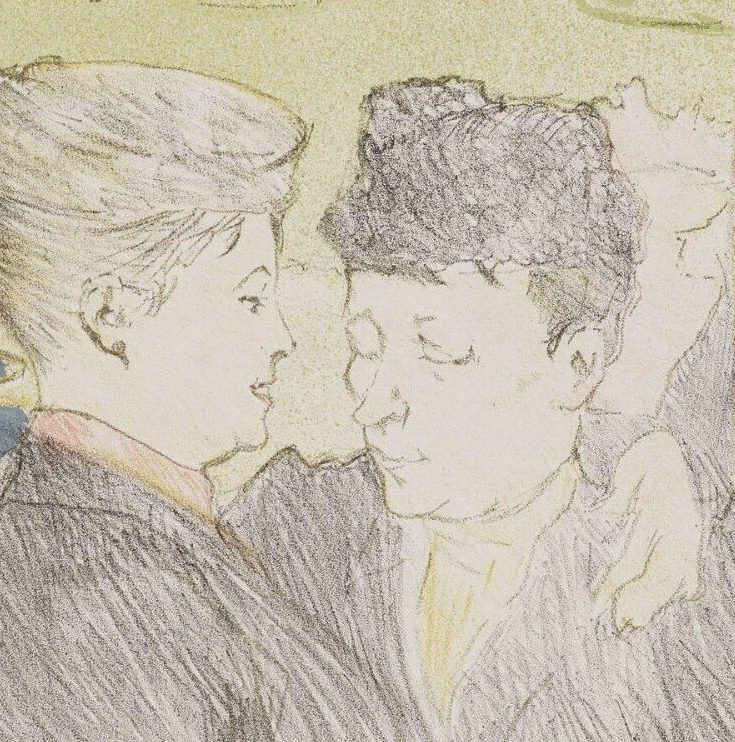
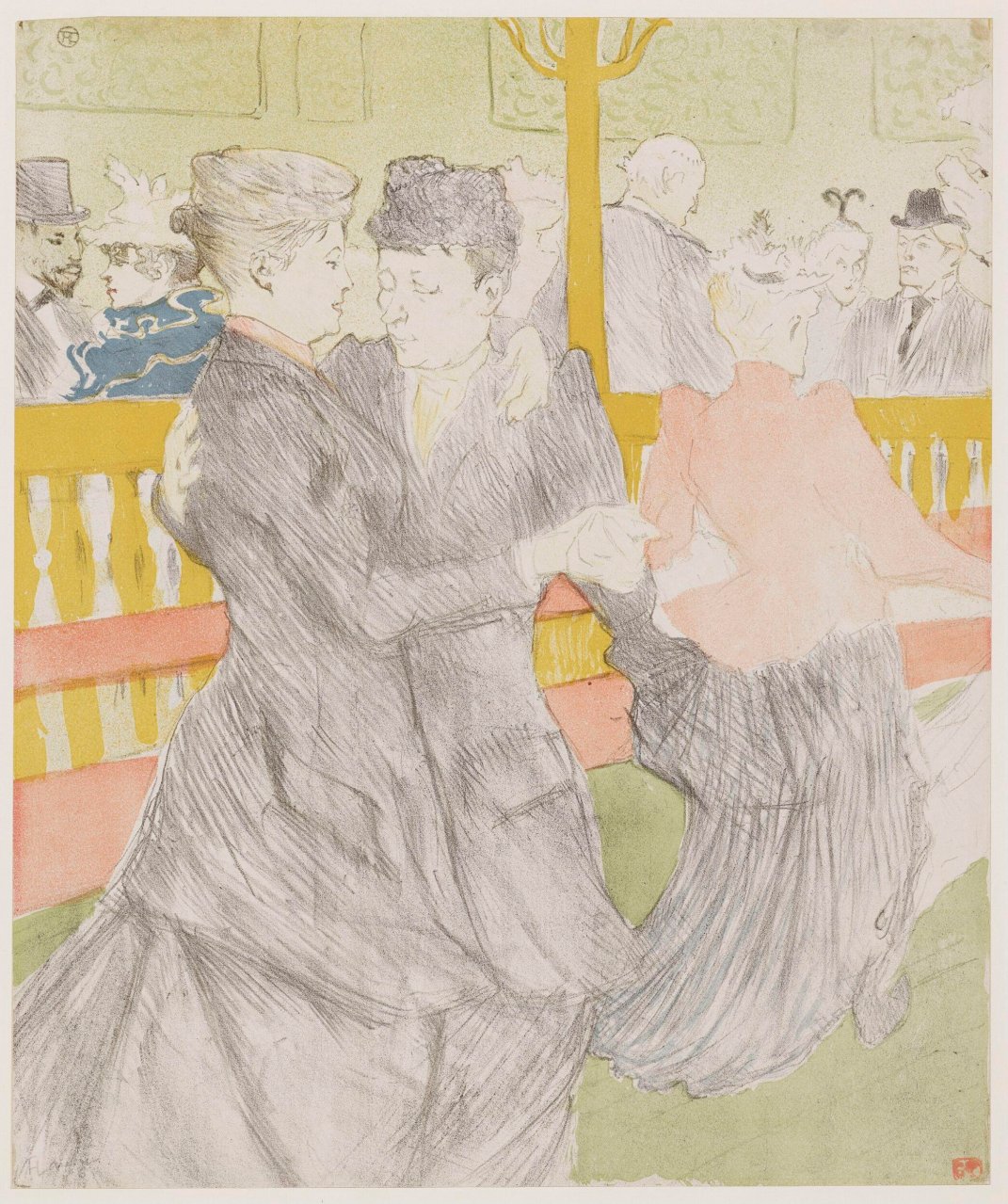
Toulouse-Lautrec, Henri de. 1897. La Danse au Moulin– Rouge. Colour lithograph, 414 × 348 mm. Prints, Drawings & Paintings Collection, Victoria and Albert Museum, London.
These interviews turn around Temporalities, the theme of our 2026 print issue, which you can read here.

